Costs people forget when building a home
Most budget surprises on a custom home aren't hidden at all. They're real costs that a price per square foot leaves out. Here are the ones to plan for, with typical national ranges.
Updated October 2026 · How we calculate costs
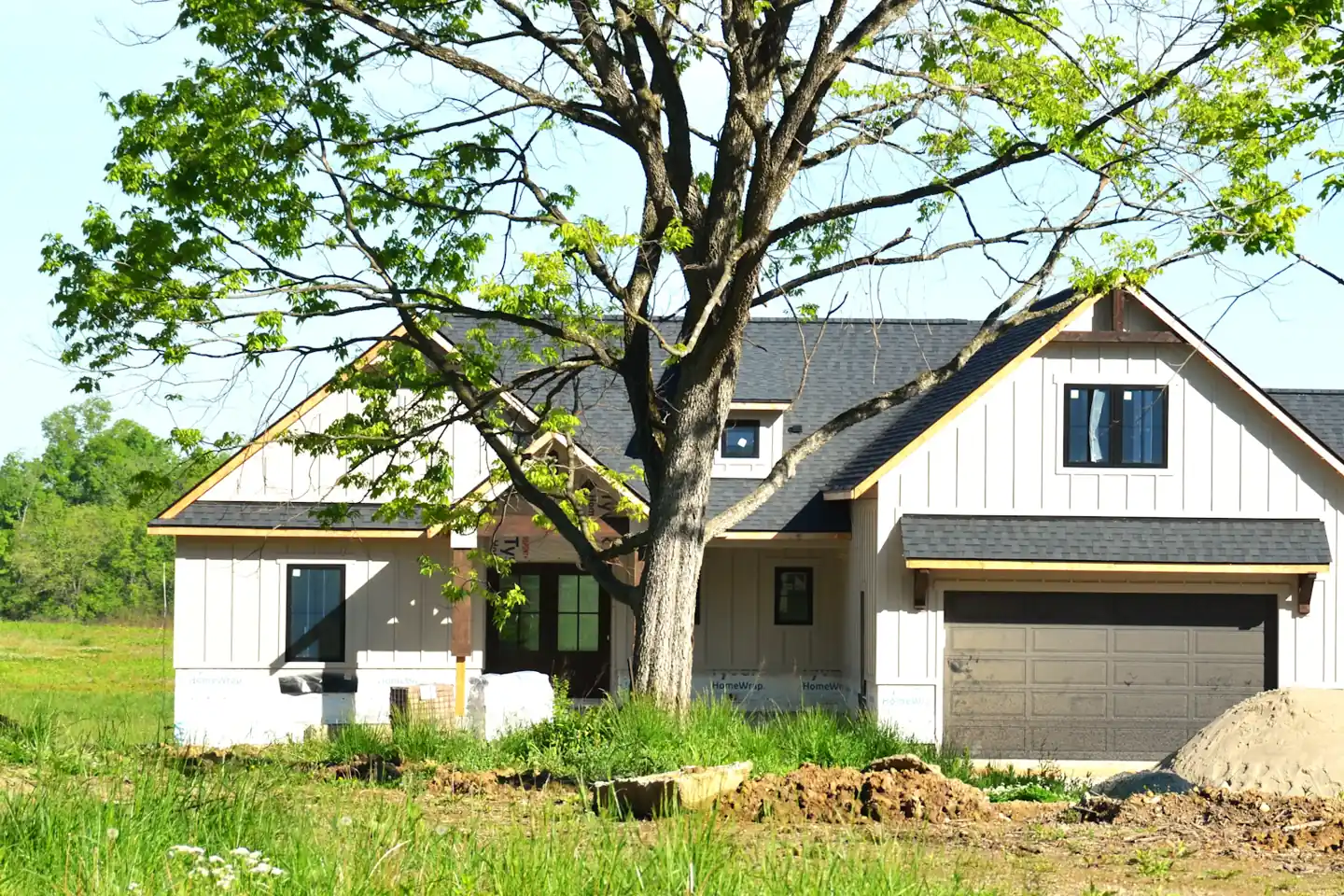
Getting utilities to the house
On a lot with city water and sewer at the street, the lines to the house typically run around $12K before connection fees. A rural lot with a well and septic system is more like $36K, and more if the well is deep or the soil needs an engineered septic system. Bringing power a long way from the road can add tens of thousands more.
Permits, impact and connection fees
Cities and counties charge for plan review and inspections, and many add impact fees for roads, parks, schools and water capacity. NAHB's 2026 study puts the average for fees paid after buying a lot at about $20,000. They run from under $10,000 in many rural counties to over $50,000 in some resort and fast-growing areas. Call the building department early; the fee schedule is public.
Site preparation
Clearing, excavation, grading and drainage run from about $8K on a flat lot to $42K or more on a steep one with retaining walls. Rock, groundwater or poor soil can add more, which is what contingency is for.
Driveway and walks
A short concrete drive and walks might cost around $6K; a long rural driveway can reach $28K or more.
Landscaping
Sod, a few trees and basic irrigation start near $12K. A designed yard with beds, walls, lighting and patios can run past $85K. Many people phase it: grading, irrigation and the front yard at move-in, the rest over a few seasons.
Design and engineering
A purchased plan costs a few thousand dollars to buy and adjust. A home designer typically charges $1 to $5 per square foot, and a full-service architect 8% to 15% of construction. Structural engineering, a survey and a soil test add several thousand more.
Construction loan interest
During construction you pay interest on the money drawn so far. On a typical build, that adds up to tens of thousands of dollars before the loan converts to a mortgage, plus closing costs. It belongs in the budget.
Things that come after the keys
- Window coverings. From about $2,000 for basic blinds to $20,000 for custom treatments, and more for motorized shades.
- Furniture and rugs for rooms that didn't exist before.
- Appliance and fixture upgrades beyond the allowances in the bid.
- Moving and storage, sometimes twice if you sell first.
- Property taxes and insurance during construction, and higher taxes once the home is assessed.
Extras that are easy to underestimate
| Feature | Typical starting cost |
|---|---|
| In-ground pool | $85K |
| Outdoor kitchen | $18K |
| Residential elevator | $60K |
| Solar panels | $30K |
| Standby generator | $14K |
| RV or boat garage bay | $55K |
These are national averages; your area may run higher or lower.
How to protect the budget
Carry a contingency of 5% to 10% inside the build budget, and keep a separate reserve for upgrades you'll want once you see the house take shape. Your estimate includes the first and shows the range for the second.